TRADING RISK & FINANCIAL WELLBEING
Borrowing money to trade: when a trading loss becomes a debt
It might begin with a small request: “Can you lend me £500? I’ll return it next month.” You have seen a convincing strategy or had a good week on a demo account. Then the first trade loses. Now the account is smaller, and the repayment date is closer. This article is for anyone considering borrowing to trade, or trying to deal with a loss. There is no judgement here. Never borrow money to fund speculative trading—whether from friends, family, credit cards or a lender. A loss does not remove your obligation to repay.
The debt remains even when the trade loses
Borrowing from a relative can feel different from taking out a loan. There may be no interest, formal contract or credit check. But someone is still expecting their money back. An interest-free arrangement does not make a speculative trade safe, and the loss can put pressure on an important relationship.
Use only your own money for any speculative trading you choose to undertake, and only where losing it would not affect essential bills, debt repayments or people who depend on you. Even money you can afford to lose does not make a strategy profitable. Moneysmart, run by Australia’s financial regulator ASIC, warns that borrowing to invest adds repayment obligations even when investments lose value. Its guidance covers investing more broadly, rather than endorsing short-term trading.
A repayment deadline can change your decisions
A friend may need their money back on Friday. A credit-card payment may be due next week. Neither date makes a suitable trading opportunity more likely to appear. When a planned repayment depends on a winning trade, you are relying on an uncertain outcome to meet a real obligation.
Watch for changes in your own behaviour: entering because you need a result today, increasing size after a loss, moving a stop because another loss feels unacceptable, or taking a setup that does not meet your rules. These are reasons to pause. They are not evidence that you need a more aggressive strategy.
A £1,000 example: a smaller account, the same debt
Suppose you borrow £1,000 and deposit it into a trading account. The table shows separate hypothetical losses from that starting balance. It ignores interest, trading costs and additional borrowing. A 20% loss leaves £800. Restoring £1,000 would require a £200 gain: £200 ÷ £800 = 25%.
After a 50% loss, the remaining £500 would need to double to restore the original balance. The £1,000 debt still exists. These percentages explain the arithmetic; they are not targets, predictions or a plan for winning the money back. If charges apply to the borrowing, the repayment amount can also increase.
| Loss from starting balance | Account remaining | Debt still owed | Gain needed to restore £1,000 |
|---|---|---|---|
| 0% | £1,000 | £1,000 | 0% |
| 20% | £800 | £1,000 | 25% |
| 40% | £600 | £1,000 | About 66.7% |
| 50% | £500 | £1,000 | 100% |
A winning week is not proof that borrowing is affordable
A profitable demo week can feel reassuring when you want a way out of financial pressure. It leaves important questions unanswered. Were the rules written before the trades? Did you record every qualifying setup, including losses? Did you account for spread, commission and relevant financing costs? Did you evaluate a different period without changing the rules to fit its outcome?
Backtesting can help investigate a method. It cannot establish that a loan is affordable or guarantee that future results will match historical ones. The affordability of debt belongs in a household budget and, where needed, a conversation with a qualified adviser—not in a screenshot of winning trades.
If you have already lost borrowed money
You may want to keep trading until the account looks better before telling the person who lent you the money. That makes repayment depend on an uncertain result. Pause new speculative deposits and trades while you assess the situation. Existing open positions can still lose value or incur costs; do not assume that simply closing the app removes their risk. Seek appropriate advice about your circumstances.
Write down how much you owe, to whom, repayment dates, interest or charges, remaining money, reliable income and essential household costs. Build this picture without counting future trading profits as income. A debt adviser can help you understand which obligations need attention and what options may be available.
If repayment looks difficult, contact the lender or creditor early. Where it is safe to do so, speak honestly with the friend or relative involved. For example: “I lost part of the money I borrowed trading. I have stopped new deposits and am working out what I can realistically repay from my income. Can we discuss a plan?” Do not promise a date that depends on winning trades.
In the UK, MoneyHelper’s Debt Advice Locator connects people with free, confidential debt advice. Outside the UK, seek a recognised service in your country; debt procedures and available help differ. If someone is threatening you over repayment, prioritise your safety and seek local support.
Learning does not require another deposit
Once your immediate finances are being addressed, reviewing old records may help you understand what happened. Did each trade follow a written rule? Did position size increase after a loss? Did the repayment deadline influence an entry? Keep the answers separate from any urge to recover a particular amount.
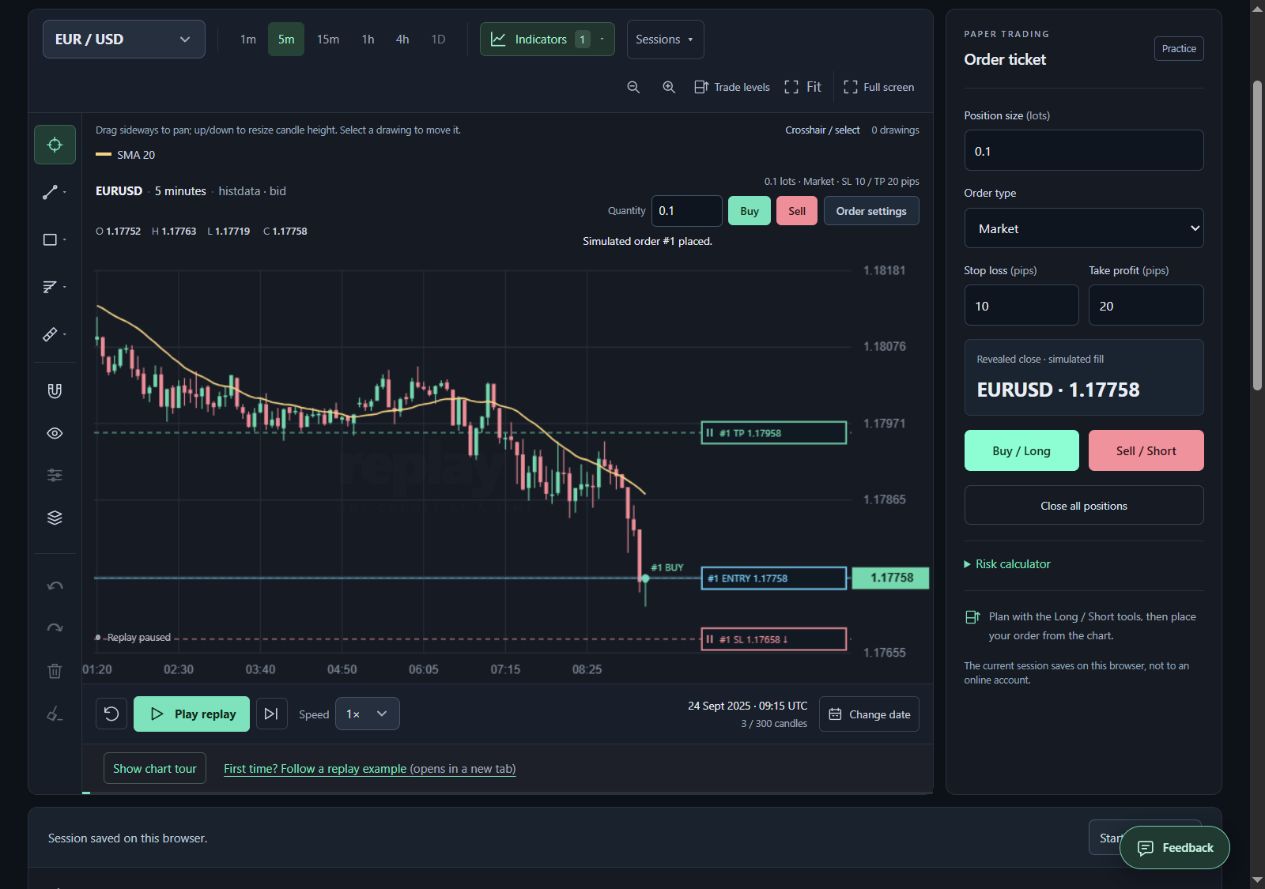
If returning to charts keeps pulling you towards another deposit, step away from practice too. There is no requirement to continue trading. For people who can practise without that pressure, historical replay can illustrate decisions without funding a live trade. ReplayPip’s simulated results exclude trading costs and do not reproduce every feature of broker execution. They are not evidence that a debt can safely be repaid through trading.
You do not have to win it back in the market
Repaying gradually from reliable income, asking for qualified help, rebuilding savings, or deciding to stop trading are options worth considering. The appropriate next step depends on your obligations and personal circumstances. Another trade is not a necessary part of recovery.
Before risking money, consider what losing it would mean for essential bills, dependants and existing commitments. The UK Financial Conduct Authority encourages people to assess their financial position and affordability before investing. If the money belongs to someone else, the consequences extend beyond the chart.
Never borrow money for speculative trading. You can learn from a loss without placing another trade today. This article is general educational information, not personalised investment or debt advice. Syed Awais provides editorial direction as ReplayPip’s creator; no professional debt-adviser qualification is claimed.