BACKTESTING PRACTICE
How to Practise Trading Without Changing Your Rules After Every Loss
You write a trading plan, take a simulated trade and watch it hit the stop loss. Immediately, another idea appears: perhaps the stop should have been wider, you needed another indicator, or you should try a different strategy.
Define the practice session before starting
A loss gives you something to examine. By itself, it does not explain whether the rules were flawed, the setup was misidentified or the trade simply had an unfavourable outcome. Structured practice helps separate those questions.
Give the session a purpose: “I will replay this historical period and record every setup matching version one of my rules. I will review the rules after completing the period.” Choose the instrument, timeframe, date range and stopping point in advance. Write the entry, exit and skip conditions.
This separates following the plan from reviewing it. You can note possible improvements without immediately applying them.
Separate a losing trade from a broken rule
Record the outcome and execution independently: what happened to the simulated position, and did your decision follow the written rules? A losing trade may have followed the plan exactly. A winning trade may have broken it.
Entering before the required candle closes remains a rule violation even if price reaches the target. Recording only profit hides the difference. Use labels such as “followed rules”, “entered early”, “changed exit” or “unclear setup”. Describe uncertainty rather than forcing a confident answer.
Keep an ideas list beside your journal
During replay, you may notice a potentially helpful filter or an exit condition that is difficult to apply. Record it separately: “Possible revision: define how close price must be to the level before the setup qualifies.”
Continue with the existing rules for the planned test unless an error makes it unusable. If you must stop, record why and preserve partial results. This prevents an observation from silently changing the experiment halfway through.
Review at the planned stopping point
Examine the complete record. Were losses concentrated around a condition? Were entries consistent? Did uncertainty cause skipped trades? Did the same rule receive different interpretations?
Some findings concern the strategy; others concern how clearly the instructions were written or followed. Choose a specific revision rather than changing several things at once. Give it a new version number and retain the earlier results.
Practise the revision on another period
Once you have used a chart to develop a change, you know something about its outcome. Examine the revised rules on a separate historical period. Label development and subsequent evaluation results separately.
Repeating a familiar date helps with learning the interface, but it does not provide the same evidence as making unfamiliar decisions.
Backtesting Mistakes That Can Make a Weak Strategy Look Good
Use practice to improve your records
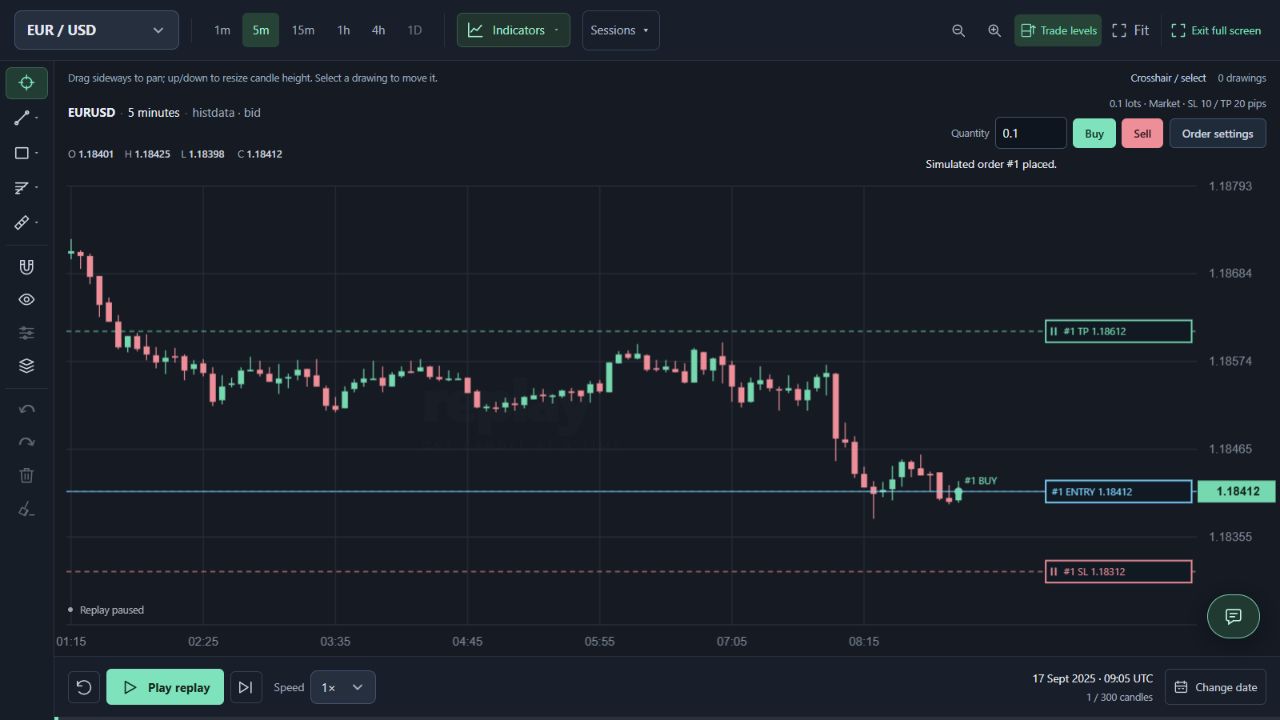
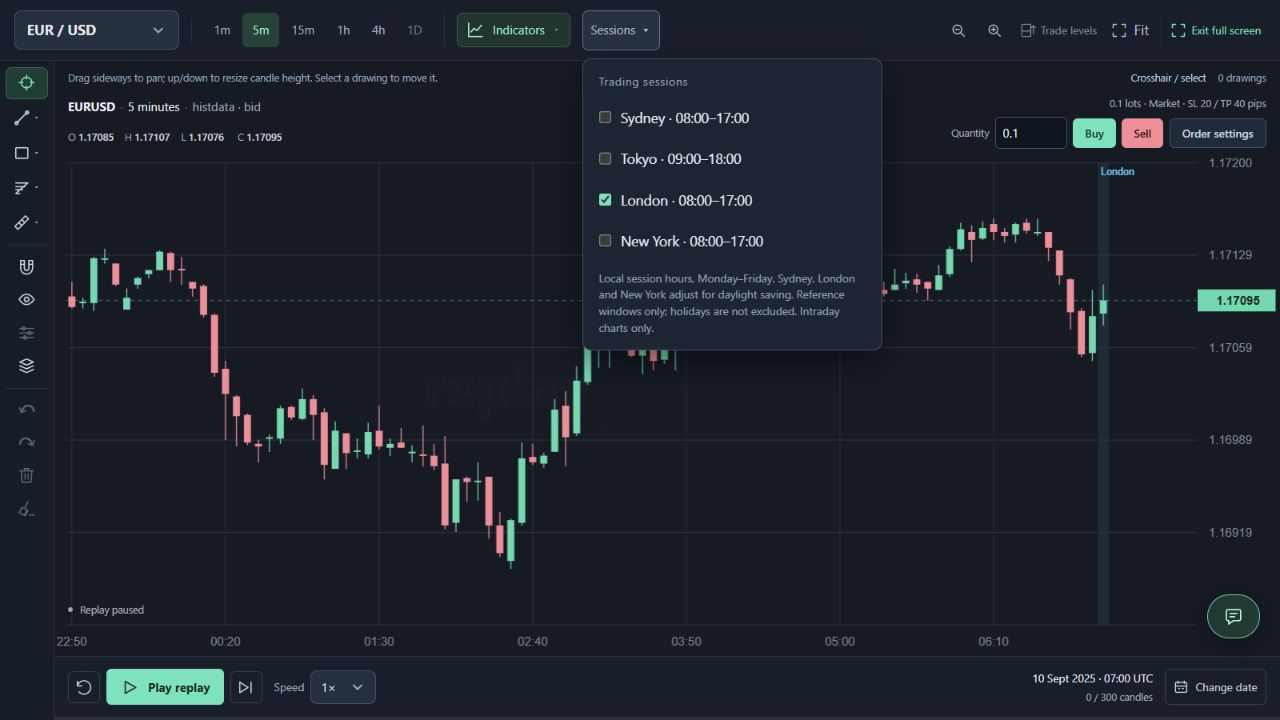
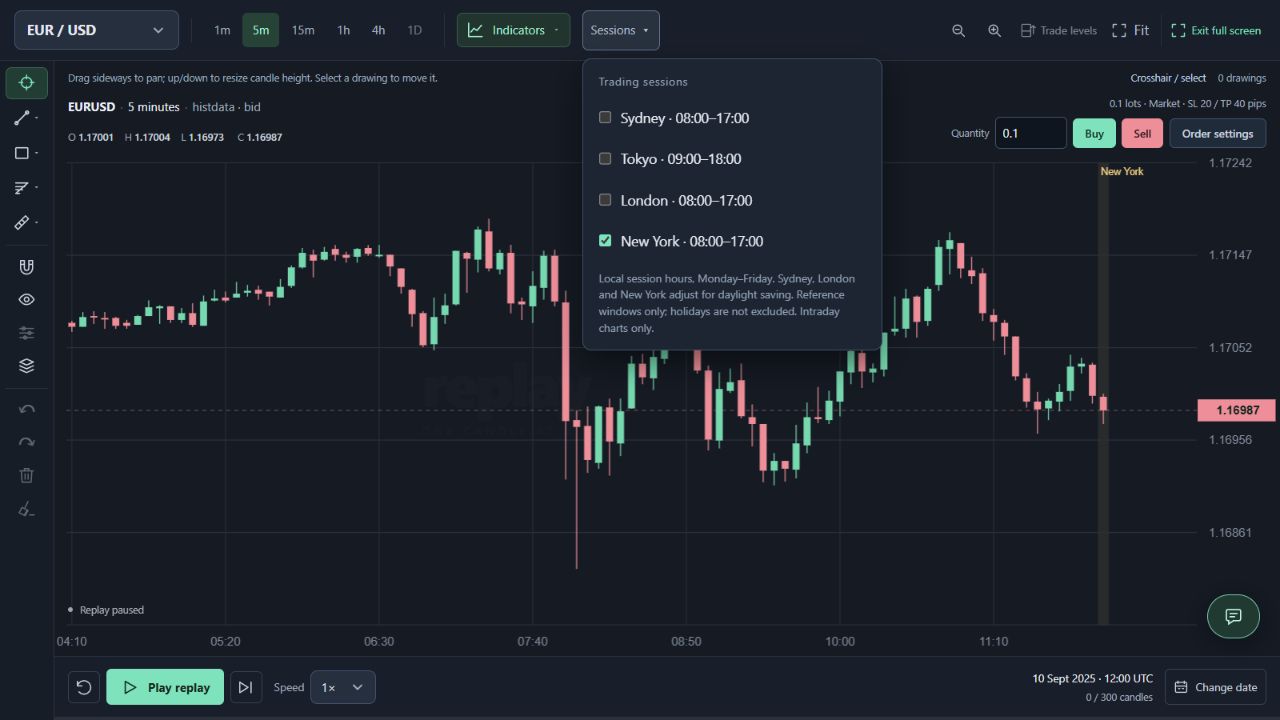
ReplayPip lets you pause, reveal candles and inspect simulated trades. Keep a separate journal because browser storage is not a permanent backup. The journal template and recorded EUR/USD exercise provide examples of documenting a plan and an exit.
Consistent practice can help you evaluate your process. It cannot establish that future trading will be profitable. Simulated results do not reproduce every cost, execution condition or pressure of live trading.
Forex backtesting journal template for a spreadsheet
EUR/USD replay case study: a recorded trade from plan to exit