BACKTESTING PRACTICE
Backtesting Mistakes That Can Make a Weak Strategy Look Good
A backtest can produce an encouraging result and still provide weak evidence. Selecting favourable examples, changing rules after seeing outcomes or leaving out important costs can make the test answer a different question from the one you intended.
Choosing only the obvious setups
On a completed chart, a strong move attracts attention. It is easy to notice the setup before that move and overlook similar setups that failed.
Choose the instrument, timeframe, date range and entry rules before starting. Work through the range in order and record every qualifying setup. If you skip one, record why. This distinguishes a planned filter from a decision influenced by knowing the outcome.
Using information you did not have
If a rule requires a candle to close above a level, you cannot use its final close while assuming you entered at its opening price. Write down when the signal becomes available and which price the simulation uses for entry.
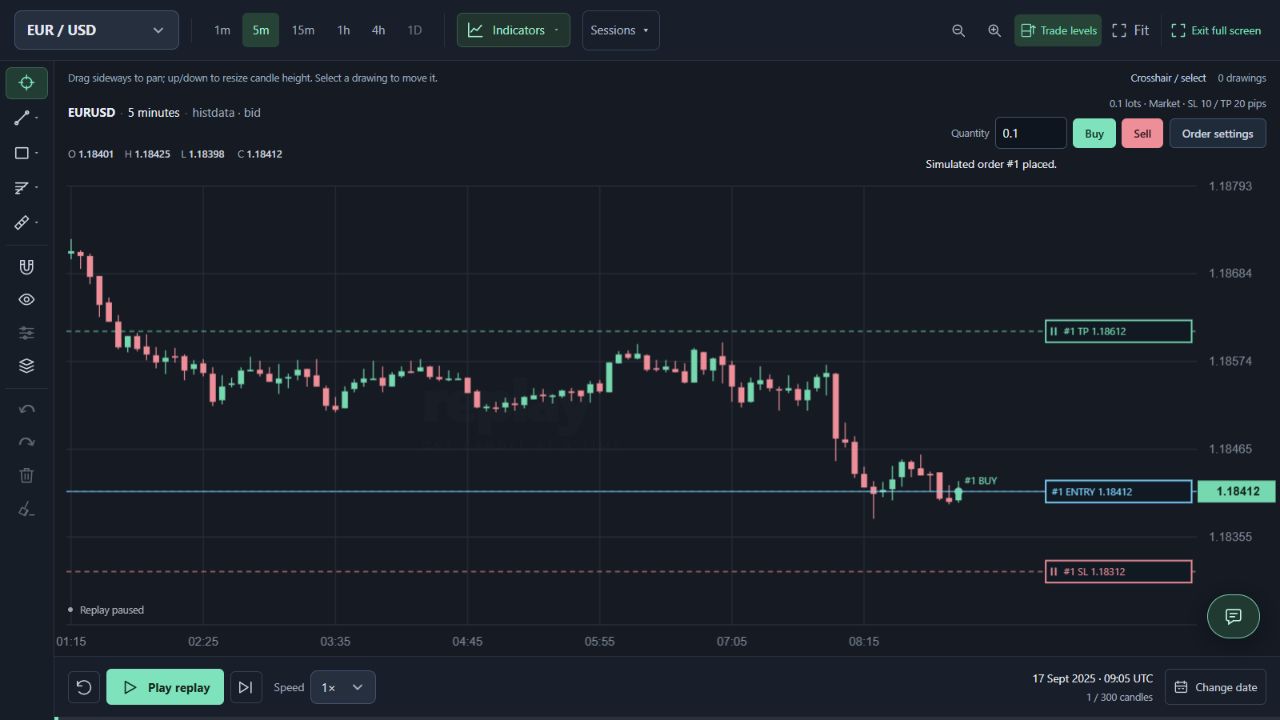
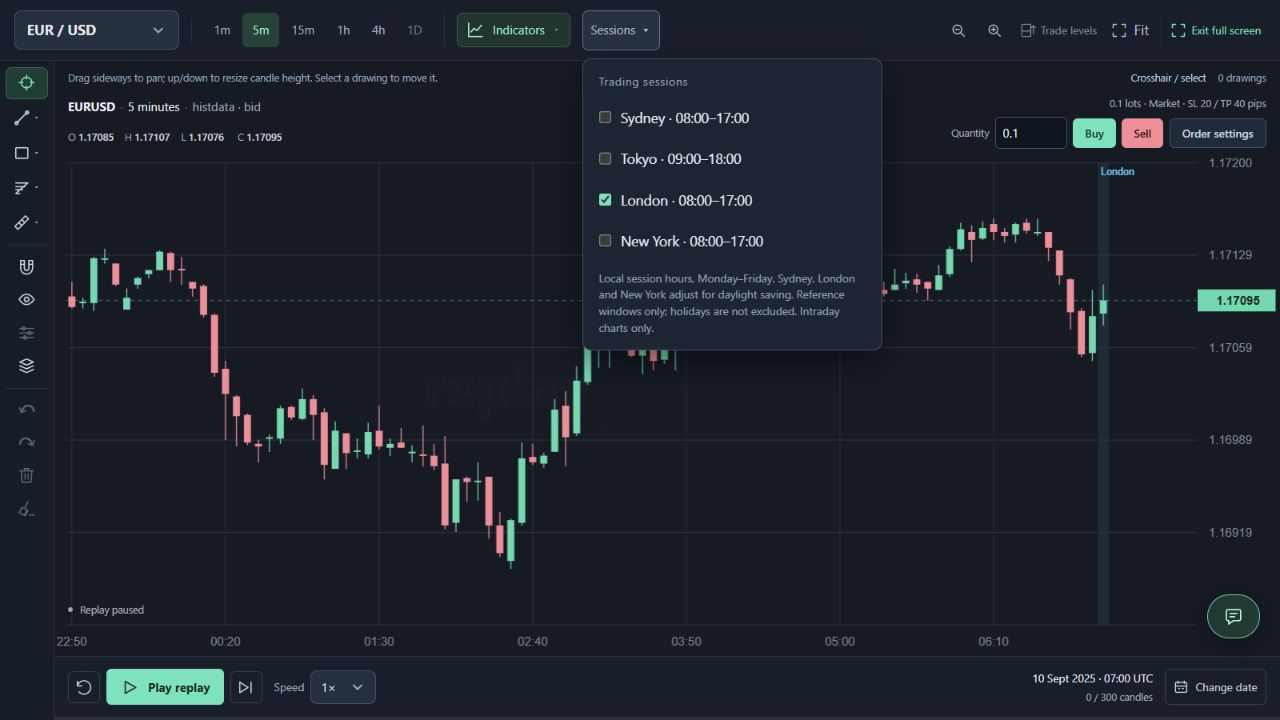
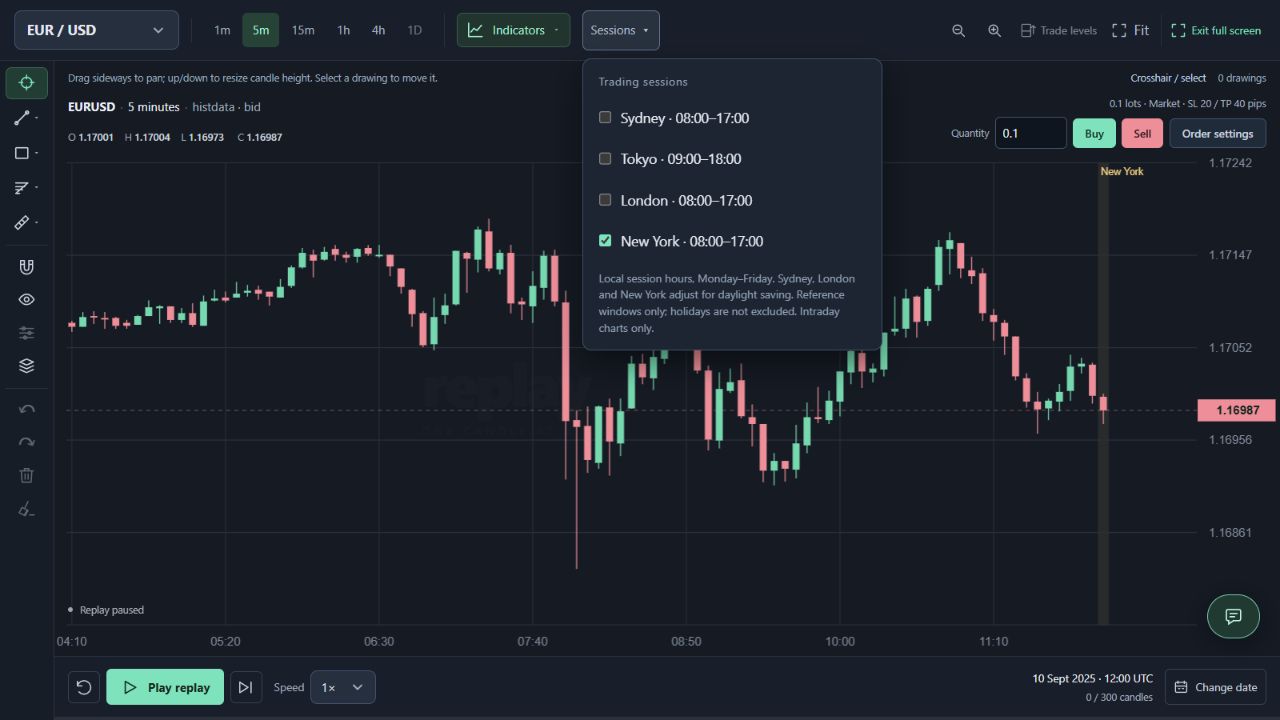
In ReplayPip, candle labels show opening times, while market orders use the revealed candle’s close. A five-minute candle labelled 09:05 covers 09:05 to 09:10. Its completed close was not known at 09:05.
Changing the rules during the test
After a loss, you might move the stop farther away. After a missed move, you might loosen the entry condition. These changes may be worth investigating, but they create a different strategy version. Combining the results can hide which rules produced which outcomes.
Keep the original record. Name the revised version, write down what changed and evaluate it separately. Reserve another historical period to examine the revised rules without further adjustment.
How to Practise Trading Without Changing Your Rules After Every Loss
Treating repeated attempts as independent evidence
Replaying the same date can help you learn the controls. Once you remember the movement, another attempt is no longer an unfamiliar decision exercise.
Label these attempts as practice repetitions. Use different, previously unseen periods when assessing whether you can apply the rules consistently.
Looking only at the final profit
Two tests can finish with the same simulated profit while following very different paths. Record the number of trades and period covered, initial risk, gains and losses, losing streaks and declines in simulated equity. Include rule violations, skipped setups and incomplete records.
These details make a result easier to interpret. A profitable total alone does not explain the risk taken to reach it.
Ignoring costs and execution assumptions
Check how the tool handles entries, gaps and candles touching both a stop loss and a take profit. ReplayPip applies the stop first when both levels are touched within the same candle. It excludes spread, commissions, slippage and financing costs. Its results are not a record of achievable broker execution.
The NFA highlights hindsight and differences between hypothetical and actual trading as limitations of simulated performance. Its guidance is linked below as background, not as an endorsement of this tool.
Make the test inspectable
Before starting, save the rules, date range, entry assumptions and stopping point. During the test, record decisions before revealing what follows. Afterwards, keep the complete record, even when it contradicts your expectations.
Use the journal template to organise observations and review how simulated fills work before interpreting results. A useful backtest should make weaknesses visible. Finding a flaw before risking money is useful even when the simulated balance does not grow.