BACKTESTING PRACTICE
Before You Trust a Trading Strategy, Test It
Watching someone explain a trading strategy can make it look straightforward. They mark an entry, point to a target, and show how price moved in their favour. But understanding a finished example is different from making a decision before the next candle appears.
Turn the explanation into rules
Before risking money on a strategy, investigate its rules, how consistently you can follow them, and what happens when a setup fails. Backtesting provides a structured way to ask those questions. It cannot promise that a strategy will work in live markets.
“Buy at support” sounds like a strategy, but it leaves important decisions unanswered. What counts as support? Does price need to touch the level or close above it? Where does the stop go? When should you avoid the trade?
Write those answers before starting. If you cannot decide whether a historical setup qualifies without changing your interpretation, the rules need more work. Finding that a strategy is too vague to evaluate is still a useful result.
Make decisions before revealing the outcome
Looking at a completed chart makes successful entries easier to spot. The challenge is deciding with only the information available at the time.
During replay, pause before advancing. Record whether you would enter, wait or skip, and why. Then reveal the next candle. Avoid moving an entry backwards after seeing the result or ignoring a valid setup because it lost. Your record should reflect the decisions your written rules produced.
Keep the losing trades
A journal containing only good examples cannot tell you much about a strategy. Record valid losses, missed setups, rule violations and trades you correctly skipped. Distinguish a losing trade that followed the plan from a decision that broke it.
If you change a rule, label the revision as a new version. Keep the earlier results so you can see what changed instead of quietly rewriting the test.
Practise with a purpose
Repeating a familiar chart can teach you where price went rather than how to make a decision. Choose a defined period and a specific question, such as: “Can I identify this setup consistently?”
After developing the rules, examine a separate period you have not used to adjust them. Review the process as well as the outcome. Did you recognise the setup, follow the exit and record your decision before advancing?
Backtesting Mistakes That Can Make a Weak Strategy Look Good
Understand what the test leaves out
Historical simulations differ from live trading. Hindsight, execution conditions and the pressure of risking real money can affect the comparison. The National Futures Association explains these limitations in its guidance on hypothetical results; the reference below provides context, not an endorsement of ReplayPip.
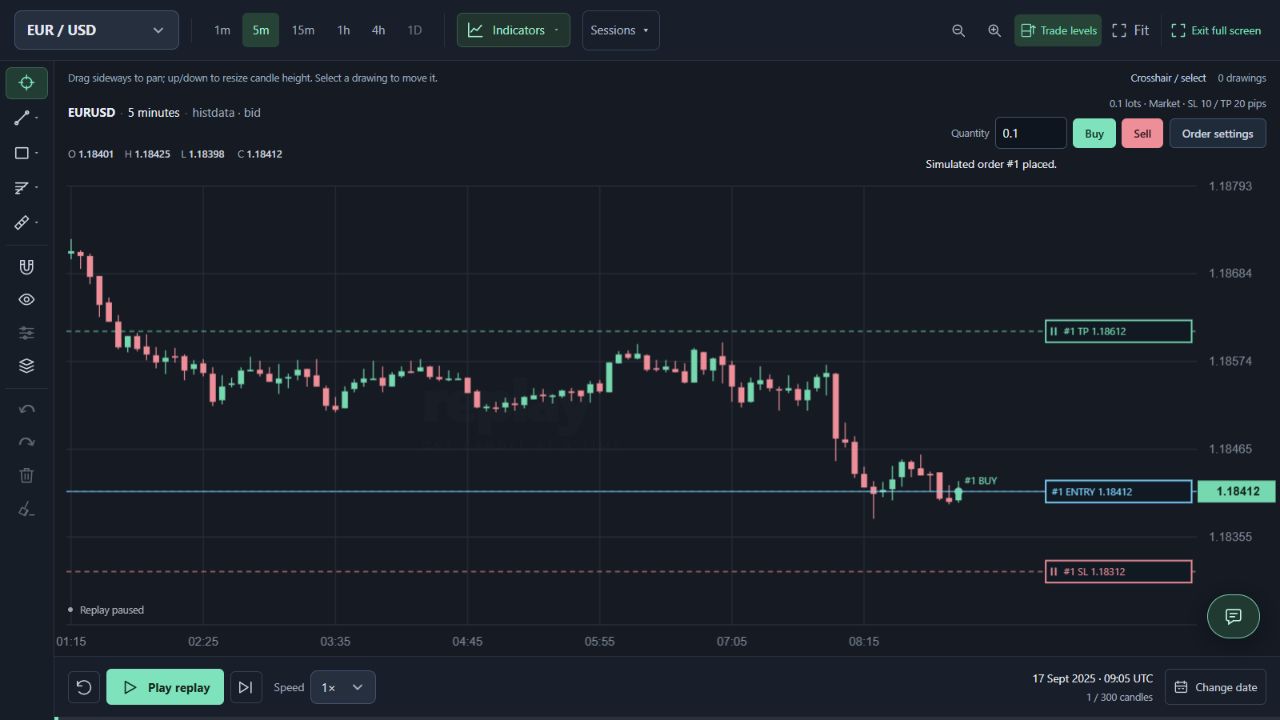
ReplayPip excludes spread, commissions, slippage and financing costs. A small simulated gain could disappear after those costs. Use candle replay alongside a separate journal to practise applying a written plan. The recorded EUR/USD exercise shows how a decision, exit rule and result can be documented.
The purpose is to learn what your rules actually produce, including their weaknesses, before drawing conclusions from an attractive example.
NFA: Hypothetical Performance Results
EUR/USD replay case study: a recorded trade from plan to exit